The System: How I Find Trades Before They Move
Most traders look at charts after something happens. I’m trying to find them before.
The setup I look for is clear on a chart. The EMAs — 5, 10, and 20 period — need to be tight, aligned in order, and starting to rise. When those three conditions line up, a stock is telling you consolidation is ending. Something is about to start.
I also want stocks that actually move. A name that drifts 1-2% on a normal day isn’t worth my time with a small account. High average daily range means more opportunity per trade.
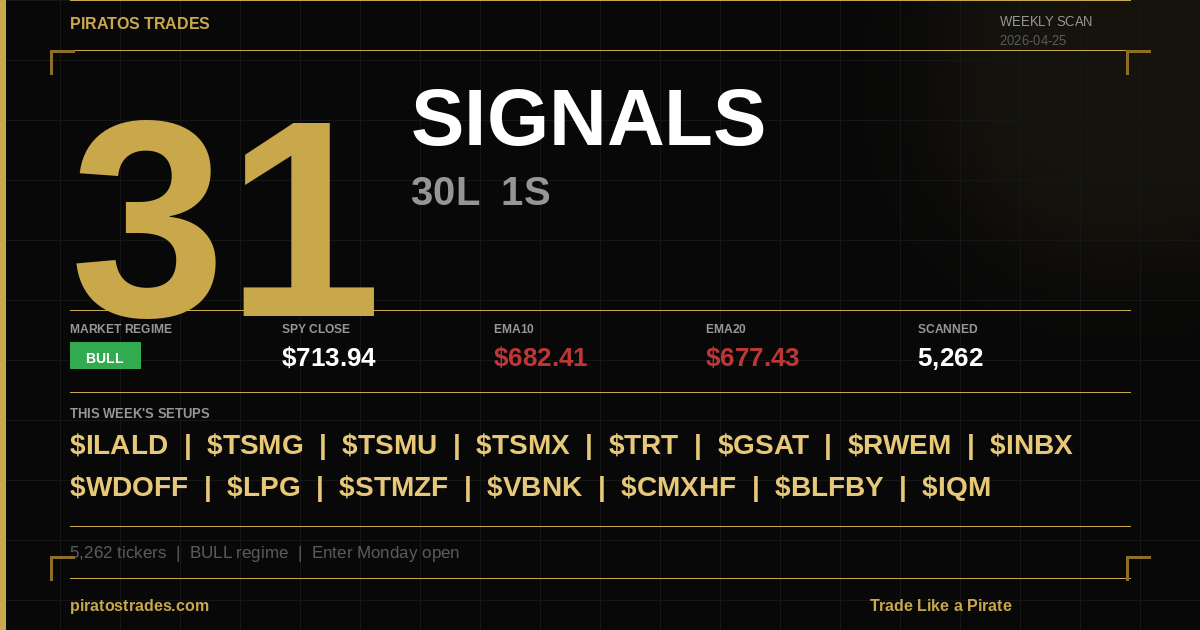
Beyond the visual setup, I built a scanner that processes thousands of tickers automatically and ranks them by quality. The specific criteria I use came from backtesting nearly two decades of price data — what separates the stocks that go on to make big moves from the ones that fake out and fade. I’m not going to detail the full scoring system here, but the core idea is this: find undiscovered stocks in early-stage moves before the crowd arrives.
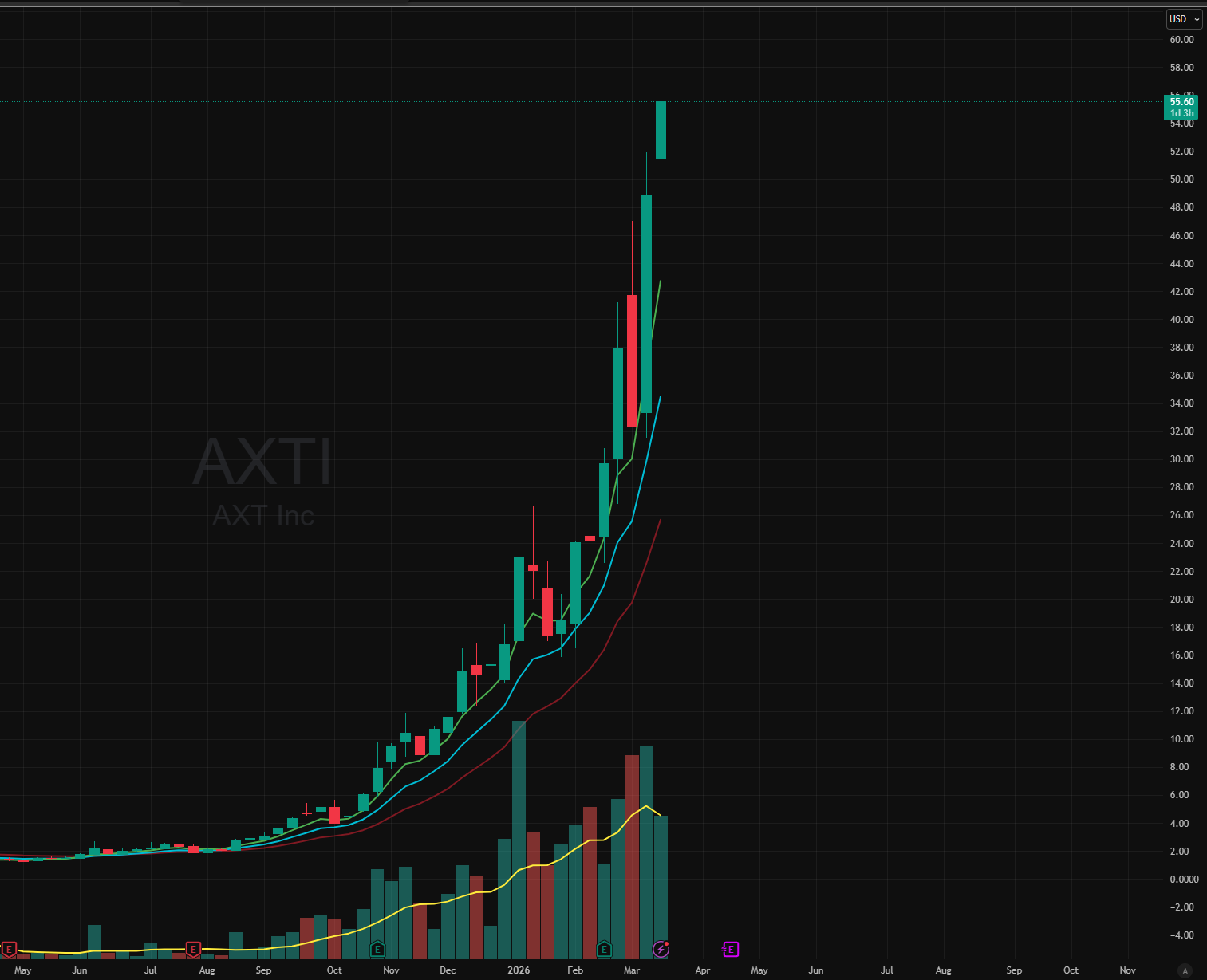
The chart above is what a good setup looks like. Months of tight base. EMAs coiling together. Then a breakout on volume that doesn’t look back.
That’s what I’m hunting.
Why I’m paper trading first
I haven’t traded real money in swing trading yet. I came from a similar system and this is a step up. The €1,000 I’m starting with is real. Losing it on a system I haven’t validated in live conditions would be careless — and after 20 years of poker, I know the difference between a system leak and bad luck.
Paper trading for 60 days gives me live data without the downside. If the signals perform, I go live. If they don’t, I fix the system first.
Every paper trade signal goes to the Telegram channel — entry, stop, reasoning. No hiding. If the system works, you’ll see it. If it doesn’t, you’ll see that too.
Follow along: t.me/PiratosTrades
Trade Like a Pirate ☠️
📈 TradingView | 🏦 IBKR
📢 Free weekly scan + trade updates: t.me/PiratosTrades
🔒 Full trade details: piratostrades.com/vip